Buying an Apartment in a Project Under Construction: Risk or Opportunity?
Buying an apartment in a project under construction can turn into a significant opportunity, not just a risk, if you proceed with the right company and take informed steps. Conversely, wrong choices can lead to consequences that strain both your budget and your time. In this article, we will honestly discuss the advantages and risks of early-stage housing investment; we will explain step-by-step how to proceed more safely by choosing a reliable contractor, examining contract details, and planning financially.
Why is buying an apartment in a project under construction so popular?
The rapid rise in housing prices in Turkey in recent years has led investors and first-time homebuyers to focus on “earlier phase” projects. Buying an apartment under construction offers a more affordable initial cost compared to turnkey apartments, while also providing the opportunity to benefit from the appreciation in value until the project is completed.
Especially in branded housing projects, the prices and payment plans offered during the launch period become attractive for both investors and buyers looking to live in the property. Working with a company that has completed projects like Life, Loca, Gold, Deluxe, and Loft, as well as ongoing projects, offers the opportunity to evaluate the process not only in terms of “price” but also in terms of “trust and delivery capability.”
Early-stage residential investment: The mathematics of opportunity.
Early-stage real estate investment simply works on the principle of “buying future value at today’s price.” Prices announced at project launch typically increase gradually as construction progresses and the delivery date approaches. Thus, an investor who enters a project in the early stages can benefit from the premium resulting from several price updates for the same apartment until completion.
The main advantages that stand out in this process are as follows:
- Lower starting price
- The company offers installment and flexible payment plans.
- Additional discounts offered for cash purchases.
- For residential spaces, there are more options regarding facade, floor, and apartment plans.
Especially in projects located within the city, close to transportation hubs and social amenities, investing early at the right price level can translate into significant capital gains over the years.
Key advantages of buying an apartment under construction
When you buy an apartment from a project under construction, you can benefit not only from the price but also from the payment plan and the quality of the living space. While the project is under construction, developers often offer more aggressive discounts, low down payments, and long-term in-house payment plans to accelerate sales.
In addition, you will have the opportunity to live in or invest in a building constructed with new technologies, which is highly energy-efficient and complies with current earthquake and building standards. A brand proven with 5 completed projects and ongoing projects adds an extra layer of trust in terms of construction quality, material selection, and post-delivery site management.
What are the risks in a project under construction, and why are people hesitant?
While early-stage housing investment is attractive, the most frequently asked question is, “What if the project is delayed or never completed?” Financial difficulties, delays in licensing or zoning processes, legal disputes, or the contractor’s poor cash management can all jeopardize the delivery process.
Another risk is that the apartment may not meet the promised specifications by the delivery date, the quality of materials may not match the technical specifications, or social amenities may be missing. The common denominator of all these risks is the concept of a “reliable contractor.” Working with companies that have strong references, completed projects, and operate with transparent contracts significantly reduces these concerns.
How can you identify a reliable contractor?
Choosing a reliable contractor is the most critical factor in determining the risk-opportunity balance when buying an apartment under construction. The first step is to visit the projects the company has previously completed and, if possible, speak with residents of those projects. Observing how well what was promised matches what was delivered provides a much more realistic picture than just relying on promises made on paper.
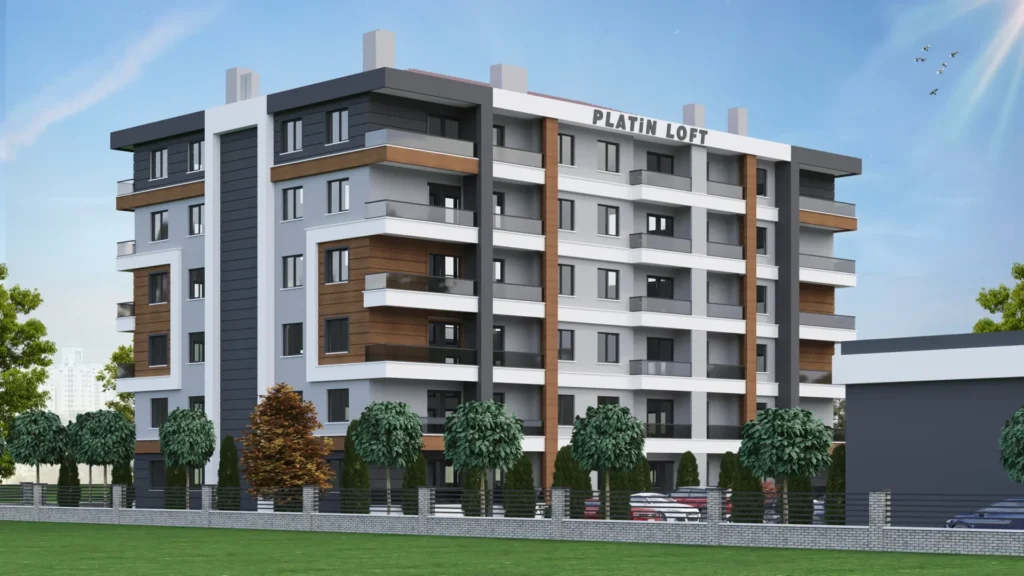
Completed projects like Platinum Life, Platinum Loca, Platinum Gold, Platinum Deluxe, and Platinum Loft demonstrate not only a company’s construction capacity but also its performance in areas such as post-delivery site management, material durability, punctuality, and customer satisfaction. When considered alongside ongoing projects, a consistent track record of production and delivery instills in investors the feeling that “this company finishes its work and stands behind it.” A trustworthy brand image is built precisely at this point.
Contracts and legal framework: Managing risk on paper.
One of the most important steps to take when buying an apartment under construction is to understand the details of the sales contract you will be signing. This contract includes:
- Delivery date
- Penalties to be applied in case of delay.
- The characteristics of the materials to be used.
- Changes that can be made to the apartment plan.
- When and how the title transfer will take place
- Payment schedule and late payment terms
These critical elements must be clear and in writing.
Especially in high-value real estate investments, seeking support from a lawyer or an expert experienced in real estate law provides strong assurance for both investors and buyers intending to reside in the property. Even when working with a reputable brand, ensuring that contract clauses are clear and enforceable prevents potential future disputes and provides a legal basis for your trust.
How can a price advantage be achieved in a project under construction?
The most well-known advantage of buying an apartment from a project is the possibility of purchasing the same apartment at a lower price compared to the price at the time of delivery. Prices set during the launch period are often more competitive than those of finished apartments in the area, in order to increase the project’s recognition and accelerate sales.
As construction progresses, blocks rise, and the project takes shape, prices are periodically updated and generally trend upwards. Thus, a buyer who invests early in the project can reap significant premium potential, as similar apartments may sell for a higher price at the time of delivery.
How does the payment plan facilitate early-stage home investment?
While turnkey apartments often involve high down payments or short-term payment options, projects under construction offer a more flexible financial framework. Different scenarios, such as interest-free installments, low down payments, and balloon payments upon delivery, make it possible for both investors and first-time homebuyers to enter the process without straining their budgets.
This flexibility is particularly valuable for investors who want to incorporate rental income into their plans for the future. When you rent out your apartment after its completion, you can plan for the rental income to cover a portion of your installments. A company that has demonstrated a strong grasp of financial planning with completed projects will protect you from financial surprises by offering more realistic timelines and sustainable payment options for its ongoing projects.
Apartments under construction and personalization: Impact on quality of life.
A frequently overlooked but significant advantage of buying an apartment from a project is the opportunity to tailor your living space more closely to your own taste. While construction is in its early stages, you may have the chance to choose from various alternatives for details such as flooring, kitchen cabinets, countertops, and bathroom tiles, all in keeping with the project’s design.
In this way, the apartment you receive ceases to be a standard “typical apartment” and becomes a home that reflects your style. When examining completed projects, it is seen that these personalization processes are managed more professionally in branded residences, increasing both the quality of life and the satisfaction of the homeowner. This is an important element that fosters trust in the brand.
Rental income and exit strategy from an investor’s perspective.
For those investing in early-stage residential properties, there are two primary avenues for return: rental income and capital gains from sales. Once the project is completed, your apartment in a new, modern building will generally have higher rental potential than older properties in the area. This directly impacts the rental yield and payback period.
On the exit strategy side, some investors prefer to realize the “project period premium” by selling the apartment shortly after delivery, while others focus on long-term rental income. Looking at the market behavior in the completed Life, Loca, Gold, Deluxe, and Loft projects, it can be seen that there is more vibrant demand and a more predictable price range in resale in branded residences. This picture serves as a guiding reference for investors who are positioned in new projects.
The risk-opportunity balance for residential home buyers.
Not only investors, but also many first-time homebuyers or those looking to move to a better home, prefer projects under construction. For those buying for residential purposes, the biggest advantage is being able to find a place in a modern, well-equipped complex with strong social amenities, located within the city, at more affordable prices.
On the other hand, the most significant disadvantage is that the move-in will not happen immediately, but several years later. Those willing to wait have the chance to acquire a newer and more affordable home on the delivery date, compared to ready-made apartments with similar features in the same area. Choosing a reliable contractor, transparent communication, and a strong contract structure make this waiting period much more manageable, both psychologically and financially.
Checklist for mitigating risks in a construction project.
There is no such thing as a risk-free investment; however, you can manage the risks. When buying an apartment under construction, the following steps form a practical checklist for both investors and those buying for residential purposes:
- Visiting the company’s completed projects on-site, and if possible, speaking with residents.
- Examining the project’s official documents such as permits, zoning permits, and condominium ownership documents.
- Read the sales contract carefully and clarify the delivery date and penalty clauses.
- Make sure the payment plan fits your budget and is sustainable.
- Research rental and sales comparables in the area to see the price position of the project.
- Visiting the construction site to observe the quality of workmanship and the progress of the construction.
Working with a well-known brand in the market, with 5 completed projects and ongoing projects, makes each of these steps more transparent and predictable. When you proceed with a trustworthy, honest, and corporate structure, you feel more secure at every stage of the process.
Buying an apartment in a project under construction: Is it a risk or an opportunity?
Considering all these points together, it’s possible to say that buying an apartment in a project under construction, when the right conditions are met, is closer to an opportunity than a risk. Early-stage housing investment, when done in the right project with a reliable contractor, transforms into a strong real estate strategy thanks to price advantages, flexible payment plans, and potential for value appreciation.
For those buying for residential purposes, it opens the door to a higher-quality living space in exchange for a few years’ wait; for investors, it offers higher return potential. The critical factor here is to go beyond marketing rhetoric and act according to the company’s delivery performance, contract terms, the dynamics of the region, and your own financial limitations. Moving forward with trustworthy, honest, and strong brand value structures can clearly tip this equation in your favor.
Frequently Asked Questions (FAQ)
- Is buying an apartment in a project under construction always more profitable?
No. Profitability depends on the project’s location, pricing level, the company’s reputation, the supply-demand balance in the area, and general economic conditions. In a project where the launch price is already well above the regional average, simply buying an apartment “from the project” doesn’t guarantee profitability; comparison with similar properties is absolutely necessary. - Is the number of projects completed the only criterion for choosing a reliable contractor?
The number of completed projects is an important indicator, but it is not sufficient on its own. Whether these projects are completed on time, the quality of materials, after-sales services, site management, and the satisfaction of current residents are just as crucial as the total number of projects. - Is it absolutely necessary to consult a lawyer when buying an apartment from a project?
While not mandatory, consulting a lawyer provides a strong layer of security, especially in high-value real estate purchases. Obtaining legal support regarding issues such as delivery dates, penalty clauses, title transfer, technical specifications, and payment plans helps prevent future disputes. - Can I sell my apartment, which is under construction, before taking delivery?
This depends entirely on the terms of the contract. While some projects allow pre-delivery transfers, others may have certain restrictions or additional fees. If you are considering an early exit or a short-term sale, you must clarify the transfer terms before the sale. - What three questions should I absolutely ask myself when considering an early-stage residential investment?
First, “Is the price I’m paying for this project consistent with comparable properties in the area?” Second, “Does the contractor’s past delivery performance and customer satisfaction truly convince me?” And third, “Is the payment plan sustainable in the long term without straining income and expenses?” If you can honestly answer “yes” to all three questions, then buying an apartment in a project under construction is more of an opportunity than a risk for you.